





 Make a targeted strategy
Recently, many friends have reported that they feel anxious after reading the guide. Either they are doing more and more guides, or they are looking at this lightning protection and other pitfalls and don’t know whether to go there.
We have said in the previous series that when making a guide, you must first confirm where you want to go and what you want to see. For example, the core theme of August is fireworks. You can organize information about the fireworks festivals you want to see in your itinerary, and then string together the cities you want to visit.
After deciding on this, the next step is the attractions. Regarding scenic spots, in fact, everyone’s perspective may be different. For example, we always feel that there is no need to go to Mount Fuji from July to September. Why? Because there is no snow top. However, a friend said that we can go hiking. That’s the truth. When you make your own guide, you must know what you want to see, what you want to do, and what you can see at the scenic spots. Don’t just look at other people’s “guides” in confusion, as it will definitely be easy to get into trouble.
Our suggestion is that no matter whether it is at home or abroad, you can’t play it all at once in any city. If you have enough time and physical strength, arrange a few more. If you have limited time and don’t want to be too tired, go to a few less places. Leave some thoughts to think about next time so that you can have an excuse next time “I didn’t see the sunset in Kyoto last time, and the red bean paste can’t be remembered, so let’s go there again!“~


A general understanding of various regions in Japan
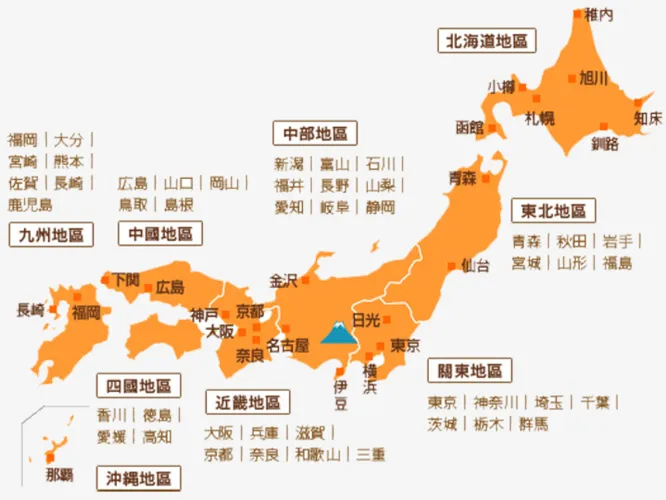
Everyone should be familiar with the map of Japan before going there. It is not necessary to understand the concepts of Kansai, Kanto, Kyushu, Shikoku, Tohoku and Hokkaido. But you probably need to know where you want to go.
We have seen a very outrageous itinerary plan before, landing in Fukuoka, then going to Tokyo, then to Keihanna, and finally back to Osaka. This itinerary was very “twisted”, going back and forth.Although the air ticket to Fukuoka seemed a little cheaper, the money and time spent on the road were far more than that.
Generally speaking, the four islands in Japan are played separately. When visiting Kyushu, feel free to visit Fukuoka, Oita, Kumamoto, and Kagoshima. When visiting Honshu, there is no need to think about Tokyo, Osaka, Nara, and Kyoto. When visiting Shikoku, go to Kochi, Kagawa, and Shodoshima. When playing in Hokkaido, isn’t it the brothers Otaru, Sapporo and Furano?

How much do you bring to Japan and what do you use to pay?
Many places in Japan require cash. For example, tickets to some scenic spots and art galleries, small restaurants, and small supermarkets all require cash. The second question is how much to bring. The basic rule is, one w per day!
Another question is what to use to pay. In fact, both Alipay and WeChat are acceptable. Many stores now support it, and their exchange rates are also good. WeChat’s diamonds are now lower than Alipay’s diamonds, but WeChat seems to require 6 transactions first.

What to do with the money you can’t spend all your money? Can I get a refund on the Xigua Card?
If you can exchange large amounts of coins back home, you can spend small amounts of coins at a convenience store.
The other one is the Watermelon Card (Apple). Can I get a refund? Yes, but the procedures are cumbersome and there are a lot of conditions. We generally deal with it in two ways,
1 is like coins, go to a convenience store and spend them all. If you have several w’s above, then just use the second method if I didn’t say it.
The second step is to find a store, preferably a chain store, like Uniqlo or Muji, go in and buy something, and swipe the money from the card. Then I returned the goods, got the cash, and took it back home to exchange for foreign exchange.
For the second method, we do not recommend that everyone do this. It is best to use the Xigua Card according to your own itinerary and do not charge too much. After all, it is very convenient.
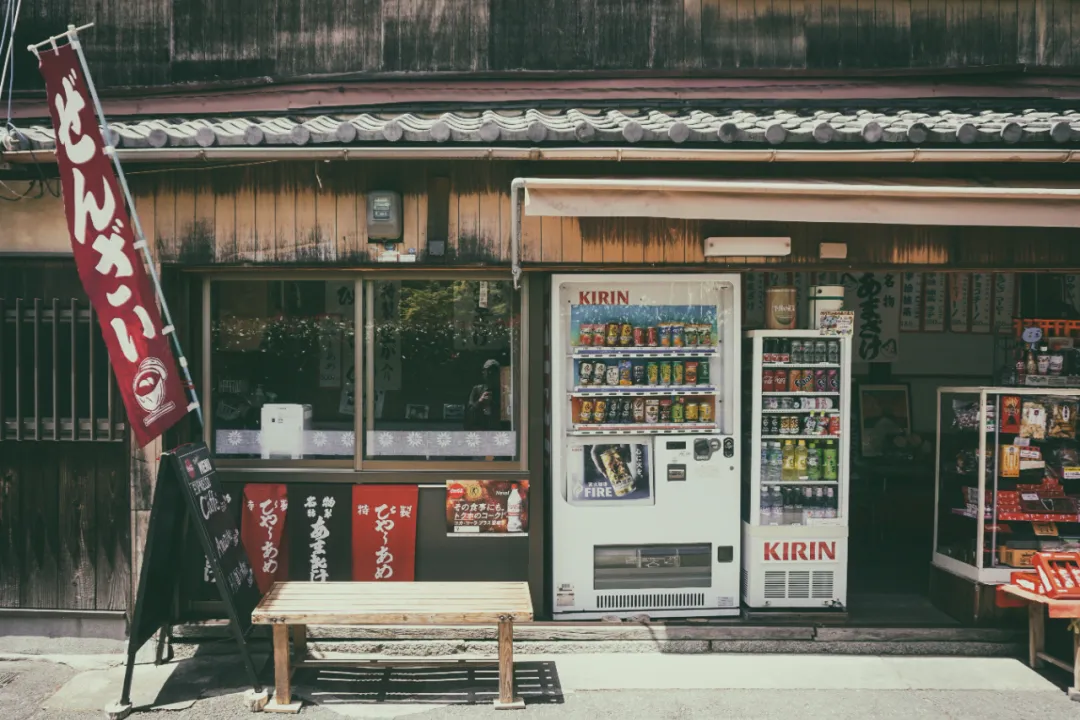

Some knowledge about avoiding pitfalls shared by online & community friends
- Be careful when taking a taxi in Japan. Don’t vomit in the car even if you get motion sick. Even if you vomit in a bag, you still have to pay a car wash fee of 40,000 yen.
- Many stores in Japan do not allow you to eat food bought from other stores (because you are afraid that there will be problems with the food from other stores), so generally if you buy it, you should either go back to the hotel to eat, or go to an open space or park to eat, and do not take it to other people’s stores to eat. Remember to bring garbage bags, many places don’t have trash cans~
- If you buy instant noodles in a convenience store, Japanese instant noodles are hard to use with a fork, so remember to use chopsticks.
- You don’t need to bring an adapter when you go to Japan. Their two sockets are fully usable by us.
- Before the bus gets off the bus, the driver has to press the button on the seat to stop. When crossing the road at some sidewalk zebra crossings, you have to press the button to turn the light green.