






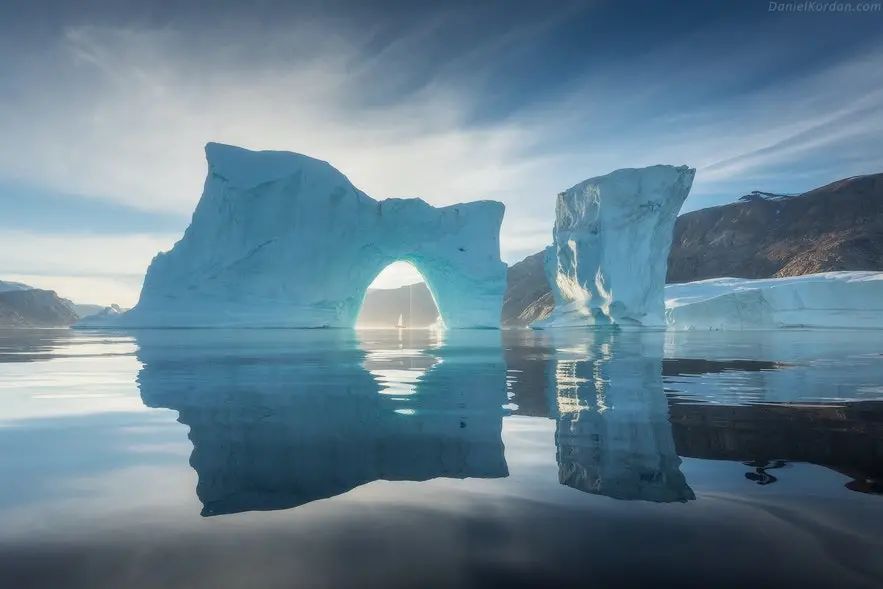
Iceland Overview
Iceland belongs to Europe, but geographically it is not on the European continent, but an isolated island in the North Atlantic. The closest ones are Greenland, the Faroe Islands, and the United Kingdom. Culturally, Iceland is generally considered one of the five Nordic countries, and its language and customs have many similarities with Denmark, Norway, and Sweden.
However, this small country has countless unique places. In terms of geographical location, it is at the junction of the two major geological plates of Eurasia and America, so volcanic activity is active. Its high latitude has given it countless glaciers, including Vatnajökull, the third largest in the world and the largest in Europe. This duality of fire and ice has earned it the nickname “Land of Ice and Fire” and “Arctic Fire Island”. Compared with these famous names, what is more worth mentioning is the unique natural scenery created by this duality, making Iceland a travel dream destination for countless people from all over the world. Coupled with its avant-garde culture, friendly people, and highly progressive ideas, Iceland in the travel world is not just a beauty, it is a travel attitude in itself.
If you want to know more about the background information of Iceland, you can read in depth this illustrated Iceland encyclopedia. If you can’t wait to start planning your trip to Iceland, then read on!
Iceland Visa
To travel to Iceland, you need to apply for a Schengen visa (Note: Iceland is not an EU country, but it is a Schengen country). If you live in the Schengen area (whether studying, working, or having permanent residence), as long as you have a legal Schengen area residence permit, you do not need to apply for an additional Schengen visa to Iceland.
If you are not in the Schengen area, nor in mainland China, such as the United States, Canada, Singapore, New Zealand and other places around the world, it depends on whether there is an Icelandic embassy in the local area. In many cases, the local Danish embassy and Dutch embassy handle Icelandic Schengen visa applications on their behalf.

A preliminary understanding of the travel budget to Iceland
Everyone wants to go out and play thoroughly, but they have to consider the length of the vacation and the most important thing – the travel budget.
Iceland is a very expensive country. If you understand the major travel items in advance, you can better plan an appropriate itinerary based on your own abilities. Air tickets depend on where you are flying from, what month you are flying, hotels, car rentals, tour groups, etc. are closely related to the travel season and travel length. Some must-participate special projects have quite different prices.
We will have more specific articles to introduce these aspects of air tickets and food in detail later. In order to more intuitively see the major expenses in different seasons or self-driving or participating in local tour groups, it is recommended that you take a look at these Iceland self-driving itineraries and Iceland group free travel itineraries. Select different lengths, dates, and number of people to see the costs.
The advantage is that there are no additional ticket fees for attractions in Iceland, and there is no tipping culture. The cost of free travel with a group basically only needs to be paid by yourself plus food (accommodation, tour groups, and airport buses are all covered). As for self-driving, you have to consider the major items such as car rental and accommodation, and then consider the gas and meal expenses.
Sometimes some friends will ask, is 40,000 yuan enough for two people to come to Iceland for 15 days? Asking this question and answering “enough” or “not enough” often make little sense. Different seasons, different travel methods (self-driving or with a local tour group), different travel routes, different accommodation standards, different vehicle types (renting a car and self-driving) or tour group levels (small group, large group), and different dining levels can have a great impact on the budget.
For example, a bed in a youth hostel for one night may cost between 3,000 and 4,000 Icelandic kronor, and 4-star accommodation in Iceland is the most luxurious level, which can reach 20,000 or even 30,000 per person, which is 7, 8 times or more. For example, for eating, some friends at the gas station can satisfy their hunger with two hot dogs, which cost only 6,700 ISK. However, a serious lunch or dinner, which is cheap in Iceland, costs 2,000 ISK per capita. In many cases, it may be 5,000 ISK.
So the budget for traveling to Iceland requires a little reverse thinking. If you want to control your budget, you can’t be too demanding on the accommodation level, you can’t have a big meal, and you should try to avoid peak seasons. If you want to definitely try a certain luxurious hotel and high-end restaurant, or if you have to choose to travel during the peak season due to vacation, then you need to set aside more budget.
You can sort out the major aspects of travel in your mind, which ones are essential and which ones can be compromised, and then plan and allocate your budget reasonably.

Travel safety in Iceland
Whether it is safe to travel in Iceland is a question that many people are concerned about, especially young women traveling alone, who often ask us about the safety risks in Iceland. The good news is that Iceland has been voted the safest country in the world many times. Iceland is also the first country in the world for gender equality and the most peaceful country, so the safety index for traveling to Iceland can be said to be the highest in the world.
However, the dangers in travel not only come from society, but also from nature.
————————————————————————————————————————
The best seasons and months to travel to Iceland
This question has no simple answer. Iceland does not have four distinct seasons, but it does have two distinct seasons: winter and summer. Spring and autumn are transitional seasons.
When considering the best season to come to Iceland, you should consider the following aspects from multiple aspects:
View
Although winter is not entirely snowy, the overall colors are cooler and the scenery is simpler. It has the ultimate feeling of “the end of the world” that many people pursue. Although the temperature in Iceland is not high in summer, the colors are bright and the fields of lupine flowers are beautiful.

Features
Travel is not just for a destination coordinate on the world map, it is an unforgettable travel experience that will truly follow you for a lifetime. Iceland has many seasonal experiences in four seasons. For example, if you want to chase the aurora, you must choose from the end of August to mid-April. If you want to see the blue ice cave, you must choose between November and March. The midnight sun can only be seen from May to early August. Puffins inhabit Iceland from May to August every year. The only accessible volcano in the world is only open from May to October. The Iceland Radio Music Festival is scheduled in early November every year. And so on. If you have an Icelandic feature that you must experience, you must first know when this feature is available.
Travel Cost
Generally speaking, June, July, and August are the peak seasons in Iceland, and all aspects of travel are more expensive. April, May, September, and October are transition seasons, and prices are relatively lower than in summer and higher than in winter. From November to March, hotel accommodation and car rental prices are relatively the lowest in the year. It is important to note that hotel prices will be much more expensive during the Iceland Airwaves, Christmas, and New Year periods than during the same period. These dates are the peak travel seasons in Iceland. Therefore, from the perspective of saving the most money, it is most suitable to come in winter during non-festival periods.
Schedule difficulty
Iceland has a small population and limited resources in all aspects. During the peak season, hotels, car rentals, popular tour groups, and Blue Lagoon tickets will be fully booked in advance. When traveling to Iceland, you basically need to start preparing well in advance. If you make a last-minute reservation, you can’t be too demanding on many aspects. If you choose to come during midsummer, Christmas, or New Year, you will need to plan far in advance. If you can’t decide on the details far in advance, it’s best not to choose these seasons.
Travel Safety
As mentioned briefly before, Iceland is very safe socially. But naturally speaking, the weather in winter is more unstable, with shorter days and ice and snow on the road, making self-driving more difficult. If you absolutely want to drive by yourself, summer is more recommended, as it is relatively easy, or late spring (May) or autumn (September, October) are also good, and the sunshine length is sufficient.

Summary of the best travel seasons
To sum up, if you want to drive in Iceland, especially if you plan to travel around the island, summer is the best option. However, if you want to drive yourself but don’t want the cost to be too high, spring and autumn are more cost-effective. For example, during China’s National Day Golden Week, October is very suitable for self-driving in Iceland in all aspects.
If you plan to see the aurora and experience the Blue Ice Cave, November, December, January, February, and March are available. Since the Blue Ice Cave is affected by the weather, generally speaking, the situation is unstable in early November and the end of March, and it may be closed due to weather. Taking into account the length of sunshine and cost, mid-to-late November, mid-to-early December, February, and early March are the ideal seasons to chase the aurora and play in the blue ice cave.
For other more specific weather, climate, travel routes, and special options, we recommend that you read this article about Iceland’s weather and four seasons in detail to find the answer. Additionally, you can read the detailed guide for that month by clicking on the hyperlink for the month mentioned above.

Learn about local transportation in Iceland and decide how to travel
Although Iceland is becoming more and more popular and can no longer be regarded as an absolute niche, in some aspects it is very different from the mainstream travel destinations that everyone is familiar with. Transportation in Iceland basically covers this aspect.
Iceland does not border any other countries. To come to Iceland, more than 97% of people must fly. The rest can be reached by boat to Seydisfjörður in East Iceland, or by yacht. So everyone no longer has to wonder, can I take a train to Iceland? Iceland and continental Europe are not connected together.
In Iceland itself, there are no trains, subways, or trams. Public transportation buses can only be used as basic transportation. Bus routes and travel routes are very different. Locals occasionally take long-distance transportation to another town, and they only stop at towns along the way. However, many Icelandic natural scenic spots are not in or around towns. Traveling in Iceland by bus is a waste of time.
So there are two most common ways to travel in Iceland: self-driving, or following a local tour group. Of course, you can also hire a special car or private driver guide, but because of the high price, it is a niche choice.

Self-driving
Self-driving on Iceland’s Ring Road No. 1 is regarded by many as one of the things that must be done in life, but it is not recommended to blindly drive in Iceland. The road conditions in Iceland vary greatly in different seasons, and natural factors such as sunshine also have a decisive impact on the itinerary. Therefore, before deciding to drive in Iceland, you should do your research, not only for the sake of reasonable itinerary arrangements, but also for travel safety.
If you don’t have much driving experience and definitely want to drive in Iceland, it is recommended to choose summer, when the road conditions and sunshine are ideal, and it is relatively safer. Even so, it is recommended that multiple people travel together and drive alternately to avoid fatigue driving and other situations. When renting a car, consider your itinerary needs. For a more detailed explanation, you can read this guide on what to pay attention to when renting a car in Iceland.
If you decide to drive yourself, even if you are experienced in driving in snow, you should also understand Iceland’s traffic regulations and road signs and self-driving safety precautions.
It is worth mentioning that insurance is not a panacea, and you should not take it lightly even if you buy insurance. First of all, there are very few comprehensive insurances in Iceland. Each type of insurance performs its own duties. There is only an insurance amount for one type of situation, and there are prerequisites. Insurance is not responsible for some losses caused by negligent driving and other circumstances. However, prices in Iceland are high, and the labor costs for both car parts and repairs are very high. Once losses are caused, the amount is likely to be huge. On the other hand, if you relax your vigilance and get into an accident because you purchased insurance, you will lose more than you gain.
FAQs about self-driving in Iceland
Will Ring Road No. 1 be closed in winter?
Iceland’s Ring Road No. 1 is in good condition, but it only has two lanes (one lane in each direction), and some sections across the river are one-way bridges. Throughout the year, Ring Road No. 1 is almost never closed. Only in extreme weather or traffic accidents may there be temporary road closures. The important Ring Road No. 1 is a key protection target of the Road Traffic Management Bureau. If a road closure occurs, it will be dealt with immediately. Therefore, most of the time, the road closure of the No. 1 Ring Road will not last more than one day, and it will even be reopened on the same day. However, there have been rare incidents where bridges were washed away due to rainfall and flooding, requiring longer repair times.

Group
People may have a negative impression of group tours, feeling that they are not free, do not have a good time, and have compulsory consumption. However, tour groups in Iceland are far from traditional tour groups in China. Precisely because Iceland’s public transportation is not enough to meet travel needs, and self-driving is not something everyone can handle, tour groups have become an important part of Iceland travel and are now very mature. Local tour groups in Iceland never force consumption, and do not arrange shopping at all. They focus entirely on scenic spots.
The most common ones in Iceland are various one-day tours departing from the capital, and there are also some multi-day tours that cover a wider area, and can even circle the island. One-day tours include transportation and a professional driver guide, while multi-day tours often include accommodation along the way.
FAQs about group tours in Iceland
Does the tour include food?
There are very few tour groups in Iceland that include lunch and dinner. Except for some itineraries that feature gourmet food, there may be a meal of Icelandic specialties. If it is a one-day tour, most tour groups do not include any meals; if it is a multi-day tour, the tour group often covers accommodation along the way, and most of the accommodation includes breakfast. Along the way, the tour group will stop at gas stations, rest stops, and restaurants. Everyone will definitely have the opportunity to buy lunch and dinner. Some long-distance hiking groups that focus on outdoor activities will remind everyone on the tour group page to bring their own meals and water because they are traveling to areas with no permanent residents and no shops or restaurants.
Many tour groups look similar, how do you choose? Are the cheapest tours good quality?
For similar tour groups, you can compare prices and reviews left by people. In addition, the transportation of the tour group (whether it is a bus, a minibus, a super jeep) and the duration also represent the value of the tour group. I personally like to choose the length of the tour group, such as a one-day tour or a multi-day tour. If there are specific travel dates, you can narrow the date range. For example, some special tour groups in winter and summer are very different. Of course, you can also go directly to a certain tour group category to find a tour group that suits you. When I recommend them to people, the ones I commonly use include Jökulsárlón glacier lagoon tours, Snæfellsnes Peninsula tours, glacier hiking tours, etc.
Are discounts available for group tours?
Iceland tour groups occasionally have discounts, but they are relatively irregular. The most popular tour groups may not have this opportunity easily. However, you can check out the package tour package, which is equivalent to getting a discount if you buy more. Most of the combinations are popular tour groups. If you put two or three together, you can get a discount, which is very cost-effective.
Are there any Chinese tour guides?
There are almost no regular Chinese-speaking tour guide groups in Iceland. Occasionally there are seasonal Chinese guided tours, usually for special holidays such as Christmas, Spring Festival, and National Day.

Private Charter
Private chartered cars are a very popular way to travel. Find a local guide and you don’t have to worry about finding the way or planning your itinerary.
————————————————————————————————————————
Choose your Iceland itinerary
After deciding on the travel date, length, and travel method, you can choose an itinerary that suits you.
Although Iceland is not big, it is often much bigger than people think. Many people think that they can visit the entire island in a few days. However, the No. 1 Ring Road, which has the best road conditions, takes at least 4 or 5 full days to circle around. If you want to in-depth visit various scenic spots along the way, it is best to have a week or even more than 10 days.

roundabout
If you want to travel around the island, I recommend you to focus on the scenic spots around Iceland’s Highway 1. Many of the famous scenic spots you want to visit may be among them.
Basic self-driving around the island. In summer, due to the long sunshine, if you want to rush, 6 days and 5 nights is also possible. However, this will inevitably require a long drive every day. Some scenic spots cannot be visited for a long time, and many niche locations must also be given up. Therefore, it is generally recommended to stay in Iceland for more than 8 days. The longer the time, the easier it is to master the rhythm. You can find itineraries of every length around the island from 6 to 15 days long. If you can stay in Iceland for 9 days, you may add the Snæfellsnes Peninsula itinerary, and if you stay for more than 13 days, you can also add the winding Westfjords.
In winter, it is recommended that you have at least 10 days in Iceland before considering driving around the island. Otherwise, the short daytime and risky road conditions may greatly reduce the comfort and satisfaction of the journey.
There are relatively few options for traveling around the island in a group tour. Multi-day tours around the island are available in winter and summer, and require at least 6 to 8 full days in Iceland. However, having an experienced local driver guide saves effort and is safer. At the same time, you can learn a lot of local cultural information.
If you are staying in Iceland for less than a week, it is better to focus on certain areas.
Various regions of Iceland

Golden Circle
The reason why the Golden Circle has become the most famous and most visited day tour route in Iceland has nothing to do with its proximity to the capital Reykjavik. The three main scenic spots can be completed in one day, and you can also add many special activities, such as snorkeling, snowmobiling, or adding a hot spring (Fontana or secret hot spring) itinerary.

South Coast of Iceland
The south coast of Iceland gathers the largest number of famous Icelandic attractions. Starting from the capital, the two waterfalls Seljalandsfoss and Skóga start as an overture, followed by Sólheimajökull Glacier, Djorari Cape, Reynisfjara Black Beach, and the town of Vík, and then gradually reach the climax, reaching Skaftafell Nature Reserve in Vatnajökull National Park, Jökulsárlón Glacier Lagoon, and Diamond Ice Beach.
There are not only famous sights that must not be missed along the way, but also niche attractions such as plane wreckage, and outdoor activities such as glacier hiking, glacier lagoon boat tours in summer, and blue ice caves in winter are all Icelandic features worth adding time to experience. So although it is possible to go back and forth in one day, considering the length of the day, it is basically only worth trying in the summer when the sunshine is extremely long. As long as the length of the itinerary allows, it is recommended to leave at least two days in the Nan’an area. Whether you join a tour group or drive by yourself, you will have more fun.

Eastfjord
A large part of the Eastfjords region is on both sides of the Ring Road No. 1, and many small towns can be reached by driving not far from Highway 1. However, there is very little information about the Eastfjords region, which has always been a niche area.
The scenery of the long fjords is beautiful, but in winter it can be snowy and windy, and occasionally there is the danger of avalanches. Therefore, the most suitable season to travel to the East Fjords is midsummer. You can drive through it by yourself and stroll through the small towns for sightseeing. If it is winter, you must be extra cautious when driving around the island and keep the pace as slow as possible. Even so, the East Fjords are not suitable for self-driving too far in winter, as many road sections can be quite dangerous. If you definitely want to visit the East Fjords, you can choose an island tour led by a local professional guide in any season.
For a detailed guide to the Eastfjords region, you can read this article about the top ten attractions in East Iceland. The scenic spots in the east are not as famous as the south coast, Lake Mývatn in the north, or even the Snæfellsnes, which has become increasingly popular in recent years. If you are interested not in the scenic spots but in the fjord towns in the east, this guide to the fjord towns in the east can help you find the escapist beauty you imagined.
All self-driving routes around the island pass through the East Fjords, but this 11-day summer self-driving tour is specially designed for the East Fjords, leaving 3 full days to explore in depth the little-known places in the East Fjords area.

North Myvatn Lake, Diamond Circle
Among the natural scenic spots in the north, Lake Myvatn is the most famous. There are many scenic spots in the Lake Myvatn area, which is famous for its geothermal landforms. Craters, volcanic lakes, lava fields, lava caves, and geothermal hot springs can all be found here. Iceland is often compared to a moon-like and Mars-like landscape, and the Lake Myvatn area is the best example.
Myvatn Lake area is adjacent to Ring Road No. 1 and extends outward along the branch line to reach Dettifoss Falls, Aspigi Gorge, Husavik Town and other places. Together with the Gods Waterfall, it forms another large scenic spot – the Diamond Circle.
The weather in the northern region is sunnier than the capital Reykjavik and the south coast, but the wind and snow will be heavier in winter, so even the Myvatn Lake area and the Gods Falls next to the No. 1 Ring Road are not suitable for inexperienced people to drive by themselves all year round. The Dettifoss Falls and Aspigi Gorge are even more difficult to reach in winter.
North Akureyri
The northern capital Akureyri is one of the most famous in Iceland, but in fact it is just a small town with a population of less than 20,000, and is definitely not a metropolis. In addition to the world’s northernmost botanical garden, what really makes Akureyri “famous” is the red heart traffic light in the town.
Whether it is a city or a small town, Akureyri is undoubtedly the most important transportation hub in northern Iceland. From here you can reach many small towns and scenic spots outside the No. 1 Ring Road. You can reach Lake Myvatn, the Diamond Circle and other areas by taking a day trip. In addition, if you want to go to Grimsey Island, the northernmost island in Iceland and within the Arctic Circle, you can also take a small plane from Akureyri.


Westfjords
After Iceland’s popularity grew, the lyrics “There is no secluded town in Iceland” became a common refrain. And those who can say this must have never been to the Westfjords of Iceland. Even in the height of summer, you may be the only tourist on the winding fjord road in the Westfjords. The streets of the seaside towns are filled with the sounds of wind, birds and waves.
The specialness of the Westfjords is also reflected in its status in the hearts of Icelanders. If you ask locals what is the most beautiful place in Iceland, many Icelanders will undoubtedly declare that the Westfjords are their favorite place in Iceland.
The glaciers of the Ice Age created the fjord landscapes in Arctic regions such as Norway and Iceland. Driving in the Westfjords, the low-altitude but extremely steep peaks rise and fall, making you feel like you are walking in a giant’s palace.
Geologically, Iceland is a volcanic island. Volcanic eruptions are changing the landscape here. It is constantly evolving and developing, and the area is quietly increasing. The areas with the most active volcanic activity are the youngest areas in Iceland. The Westfjords is one of the oldest areas in Iceland, and the volcanic activity is basically complete. There is indeed a kind of old age temperament here, which is quiet, deep and full of stories.
There are many reasons why such a special destination is still rarely visited.
First of all, the Westfjords are really far away. Even though it seems that the straight-line distance from the Ring Road No. 1 is not much and the area is not large, it actually has half the land area of Switzerland, and the length of the coastline is one-third of the entire Iceland!
The extremely long coastline corresponds to the winding road, which itself is hundreds of kilometers long, and is not suitable for turning back midway, so the requirement for the trip was increased by about 3 days. The population of the entire Westfjords itself is less than 10,000, so one can imagine how limited various travel resources are. In winter, the fjord area is even more windy and snowy, and roads are closed in many areas. Therefore, many local travel services, hotels and restaurants only operate in summer, which naturally restricts many people and further prevents the influx of large numbers of tourists.

Snaefellsnes Peninsula
Snaefellsnes is a long and narrow peninsula, not very large in area, but it is known as “Iceland in miniature”. Iceland’s business card attractions – glaciers, volcanoes, lava, tundra, black sand beaches, fjords, waterfalls, it has them all. In the past few years, I recommended Snæfellsnes to everyone, but some people often hesitated because there are no absolutely famous big-name attractions here, and they are reluctant to leave. You have to allocate some time to it in your tight schedule. In recent years, the movie “Daydreamer” and the American TV series “Game of Thrones” have pushed the popularity of Snæfellsnes to its peak. The town of Stykkisholmi and Straw Hat Mountain have become a must-see in Iceland for many people.
When you come here, you will find that Snæfellsnes has much more to offer than these two destinations. When you circle the peninsula, you will pass by quiet and beautiful fishing villages; when you enter Snæfells National Park, you will see glaciers close at hand and lava moss fields rolling down. Even if there are no other scenic spots as famous as Jökulsárlón glacier lagoon, everyone who has been here is full of praise for it.
From a geographical point of view, the Snæfellsnes Peninsula is only a two-hour drive from the capital Reykjavik. It can be traveled from the capital in one day all year round. Of course, in any season, especially in winter when there is snow on the road, the itinerary can be arranged more slowly. If you like to travel slowly and study niche attractions other than classic scenic spots, if you are a fan of film and television dramas, you hope to revisit the filming locations and recreate classic scenes when you come to Iceland.
Inland Highlands
The Icelandic Tourism Board divides Iceland into the capital region, south, east (Eastfjords), north, Westfjords, west (Snaefellsnes), Reykjanes Peninsula, and inland highlands. The inland highlands are the only areas without permanent residents and are one of the largest uninhabited areas in Europe. It covers a large area of land in the central non-coastal zone of Iceland, with an area of 4,000 square kilometers and an altitude of more than 500 meters. Many peaks are between 1,000 and 2,000 meters above sea level, many of which are covered by glaciers.
There are no permanent residents in the highlands, mainly due to the harsh climate in the interior. In winter, strong winds and severe cold are rampant. Land dominated by volcanic ash absorbs rainwater and melted snow water very quickly, making it unsuitable for crop growth. The only inhabitant of the entire interior is probably the Arctic fox, the only native mammal in Iceland.
The inland sounds like “hell”, but it is a paradise for travel lovers. There are both volcanic landforms and oases here. Valleys, canyons, rivers, and lakes are dotted in the endless black volcanic desert; gurgling geothermal steam rises from the sulfur-filled, flaming mountain-like volcanic area; the fantastic landscape intertwined with glaciers and volcanoes creates one of the ten most beautiful hiking routes in the world.
However, the roads leading inland are mostly rugged mountain roads and gravel roads, coupled with unpredictable and extreme weather conditions, making conquering the inland more difficult than traveling to the coastal areas of Iceland. The inland areas are not as specific as the Golden Circle, Lake Myvatn, and Glacier Lake. It is impossible to visit them all in one or two days. Some areas cannot be fully explored even for several days. So the interior is rarely the main destination people choose when visiting Iceland for the first time.
If you just want to get a preliminary feel for the difference in scenery between the inland areas and other parts of Iceland, learn about the five most famous inland attractions and six niche highland attractions. In terms of itinerary, although it is only suitable to drive to the highlands during the summer months, there are some professional local tour groups that use super jeeps specially modified for the highland landscape and can drive into the inland areas all year round. You can choose a highland tour group that suits you based on your preferred length of time and professionalism.
If you are driving by yourself, be sure to choose a four-wheel drive vehicle with good performance and suitable for driving in highland areas. What needs to be said again is that you may need to drive across a river to reach many inland scenic spots, and Iceland’s car rental insurance does not cover losses caused by vehicles crossing rivers. For those who have no experience in driving across rivers, once the vehicle is stuck, there may be considerable losses, so it is still recommended that you first choose a tour group led by a local professional guide. For details, you can consult China Strong Global Photography customer service.
If you want to hike in depth, you will definitely need to camp inland. Iceland is only suitable for camping in the summer and has very strict regulations. Every summer, there are ready-made hiking tours of various lengths and short routes, ranging from one day to one week.

Islands scattered everywhere
Iceland is not just an island. In addition to the main island, there are dozens of small islands scattered around. The most famous ones are Vestmannaeyjar, Grímsey, and Vidi Island in the capital Reykjavik. Each of these islands has its own characteristics, some are proud of their natural scenery (such as Herma Island, the main island of the Western Archipelago), some are because of their special geographical location (Grímsø is Iceland’s land above the Arctic Circle), and some are because of their unique cultural background (Yoko Ono built the Tower of Imagined Peace on Vidy Island in memory of her husband Lennon). It takes a little extra effort to get to these islands, and if you need to travel a long way, you will inevitably miss these hidden gems, which makes these islands quieter and less disturbed by the mainstream.

The most beautiful small town in Iceland
In addition to famous scenic spots, there are also small and cute towns that accompany you all the way in Iceland. Apart from Reykjavik, there is no other city in Iceland. Even the capital, Reykjavik, has a population of 200,000 and is quite clean. Small towns in Iceland often have populations ranging from a few hundred to thousands. Almost all small towns are built on the sea, closer to the sea where they depend for survival and convenient for fishing. Iceland is a mountainous country, so most of these small towns can be considered to be close to the mountains and the sea.
Although each of them is accompanied by beautiful scenery, they can still be compared in terms of beauty.
In our guide to the most beautiful towns in Iceland, we have selected 8 with the highest “positive ratings”: Seydisfjordur in the East Fjords, marked by the Rainbow Church, Stykkisholmur, famous for its daydreamers, Isafjordur, the remote Westfjords towns, Siglufjordur, and so on.

Capital Reykjavik
When talking about scenic spots, islands and small towns, I almost forgot the “facade” of Iceland – the capital Reykjavik. With two-thirds of the population in Iceland, Reykjavik is truly the political, economic and cultural center of Iceland. The low population density allows Reykjavik to enjoy sparse urban planning. Although the streets are narrow, they do not feel cramped at all because there are no dense high-rise buildings. The small houses are well-proportioned and colorful, and they are cute and elegant.
When traveling to Iceland, Reykjavik is the starting point and farewell place that cannot be missed. Compared with other parts of Iceland, it has better facilities and more diverse dining and shopping options.
————————————————————————————————————————
Iceland themed itinerary
The way to travel is limited by local resources, but the purposes of travel are varied, and a thousand people have a thousand answers. Maybe you want to see the Northern Lights, maybe you have seen the most beautiful blue in the world, the Blue Ice Cave, on the Internet, maybe you are impressed by the beautiful photos of the Blue Lagoon Hot Spring in your circle of friends, maybe you are a photography enthusiast who wants to shoot landscape blockbusters, maybe it is because of the realistic and imaginary locations in film and television works such as “Daydreamer” and “Game of Thrones”, or maybe you want to have a romantic wedding or honeymoon trip.

Hot Spring (Blue Lagoon Hot Spring)
Blue Lagoon Hot Spring is the first generation internet celebrity in Iceland. Many people vowed to come to Iceland after seeing the photos of Blue Lagoon Hot Spring. With the increase in popularity, the ticket prices and hotel prices of the Blue Lagoon have also increased. Many people have begun to question the value of crowding here to “crowd” hot springs, and have begun to look for alternatives to the Blue Lagoon, thus making more small-scale Icelandic hot springs popular.
From spa hot springs represented by the Blue Lagoon, to more primitive hot springs, hot spring pools, hot tubs, seaside infinity pools, wild hot springs, etc., plus hot spring swimming pools in various towns, the number of hot springs in Iceland is dozens if not hundreds. Some are considered must-gos, some may be optional, and some fall into the “come and go” category.

Come to Iceland to see the Aurora
Watching the Aurora… is a job of luck, but it is also a job of hard work, but in the end it is still a job of luck.
I don’t want to talk to you about metaphysics, but natural phenomena do have a naughty side. However, the idea that “you must see the Aurora once in your life” is an obsession shared by many people. We will help everyone “capture the Aurora” by working from multiple angles.
Academic buffs can first understand what the Northern Lights are;
If you are a traveler, be sure to know in advance the best seasons and months to see the aurora in Iceland, as well as where you should go;
Because you must see the aurora at night. For Iceland, it must be in the three seasons of autumn, winter, and early spring with dark nights, which is basically from September to mid-April of the following year. In fact, you can also see the aurora at the end of August, but because of the short night time, the opportunities are relatively rare. For specific month comparisons, the answer can be found in the above-mentioned guide to the best seasons to see the Aurora.
The travel conditions in these seasons are different. In winter, self-driving will be a little challenging due to the impact of ice and snow on road conditions, while in autumn, it is relatively easy to drive. If you’re wondering whether your driving skills can handle the Icelandic winter, chances are you can’t. People who are usually very confident in their driving skills are likely to stumble while driving in Iceland’s winter. It is recommended that everyone choose a four-wheel drive vehicle. If you don’t plan to drive, there are many options for aurora itineraries in winter. There are aurora hunting groups starting from the capital, itineraries suitable for staying mainly in the capital area, multi-day tours that include aurora chasing projects or suitable for watching the aurora at night, and complete Iceland winter aurora chasing itineraries with a group. From arriving at the Iceland International Airport to leaving, the entire process has been planned, and it is no brainer at all.
Be sure to relax when watching the Aurora.

Blue Ice Cave
The Blue Ice Cave was once more popular than the aurora in winter in Iceland. Everyone hopes to see and touch the most beautiful blue in the world with their own eyes.
Around 2015, the most famous blue ice cave was the Crystal Palace Blue Ice Cave. Later, the Aurora Ice Cave, Diamond Ice Cave, Katla Ice Cave, etc. appeared. Except for the Katla Ice Cave, which is located on the Solheimajökull glacier, the other accessible ice caves found are basically on the edge of the Vatnajökull glacier. Since the blue ice cave is formed purely naturally, its shape and color are closely related to the glacier edge conditions and weather of the year. The local guide is afraid to “guarantee” with everyone, saying that they can definitely enter a certain blue ice cave on a certain date, because they really need God to give them face.
So whether and which ice cave you can go to? From the comparison of photos, the color of Katla Ice Cave is darker, and the black color comes from the large amount of volcanic ash in the surrounding areas. However, Katla, which loses to the ice cave under Vatnajökull glacier in terms of color, has an excellent advantage – it can be reached all year round.
To put it simply, the only ice cave choice in summer is Katla, and in winter, the Vatnajökull Blue Ice Cave is the first choice. Since the tour location is a certain distance from the capital Reykjavik, if you don’t drive by yourself, there are many multi-day tours available. Starting from the capital, you can not only sightsee the South Bank scenic spots along the way, but also combine it with some special outdoor projects, such as the Blue Ice Cave.
Photography Tour
For photography enthusiasts, coming to Iceland is a carnival, but the only regret is that there is not enough time. Photography itineraries are quite different from ordinary travel itineraries. It is often necessary to leave more time for some key areas in case you do not encounter satisfactory light and you can come back again if you have the opportunity.
Over time, many local photographers in Iceland have begun to undertake Icelandic photography workshops that focus on photography. Not only are the itineraries planned according to the needs of the photographers, but there are also specialized technical discussions and sharings during the period, which is perfect for those who want to improve their photography skills. If you just love photography and don’t want to learn and communicate with professional photographers, you don’t have to take a photography trip.

Other related
Greenland Visa
Many friends will choose to stop by Greenland when they come to Iceland. Although Greenland belongs to Denmark, one of the Schengen countries, it is a special autonomous region. If you plan to go there, you need to make a special note when applying for a Schengen visa. Applying for a Greenland visa in Iceland is also very convenient, and the visa can be issued within 24 hours. However, it will still have a certain impact on the Iceland itinerary. In order to make time for visa processing, it will especially affect tour groups that leave early in the morning. So whether you should apply for a Greenland visa before leaving for Iceland, or apply for a Greenland visa after arriving in Iceland, everyone should plan in advance.
The beauty of Iceland is beyond words! If you can’t go to the moon in this life, then come to Iceland and experience the stunning beauty at the end of the world.